


Home First Steps -
Childhood in Zanzibar Growing up in India
Culture Shock Her Majesty -
The Queen ‘No Bed Of Roses’ ‘Love Of My
Life’ ‘Bohemian Rhapsody’
The Great Pretender Live Aid An Evening At
The Opera Mercury - the musician The all-round
artist Mercury - the prophet Last Days The Legend The Queen
File
FMQ in German FMQ-GALLERY My Fairy King
video Freddie Mercury memorial site Guestbook/Contact Gateway page QUEEN NEWS Links BOOKS ARTICLES
Brian May Roger Taylor John Deacon Miscellaneous Horoscope Philosophy
corner Updates
Official biography People about
Freddie About Me
MERCURY – THE ALL-ROUND
ARTIST
(scroll
down for art, fashion, literature or film sections)
Freddie Mercury: “Art School teaches you to be more fashion
conscious, to be always one step ahead”
ART...
Freddie Mercury’s
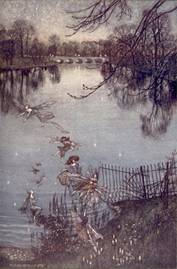
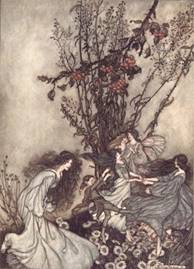
favourite art in the 60s/70s:
Alphons Mucha:
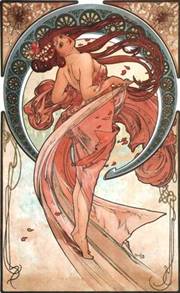
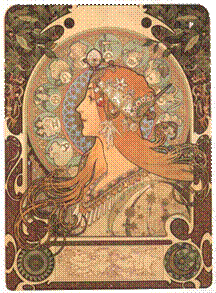
Arthur Rackham:
Richard Dadd: “Bacchanalian Scene” and “The Fairy Feller’s Master
Stroke”, a very complex painting:
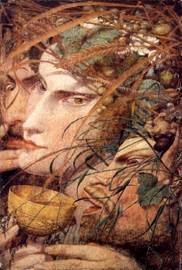
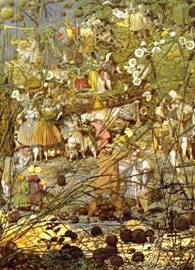
Freddie Mercury was a big
lover of art and practised it himself. A proper education in art and naturally
visual talent helped him to broaden his horizon and to develop a good taste
which accompanied him throughout his whole life and helped him to create this
special ‘Queen atmosphere’ which we know today.
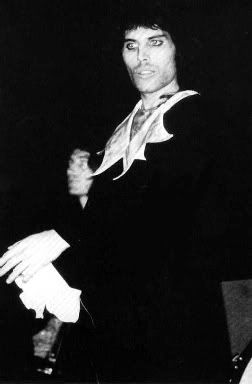
… And fashion – stage
presence:
“He was a free thinker; I think those changes of image
show a wonderful free-spirit” – Zandra Rhodes
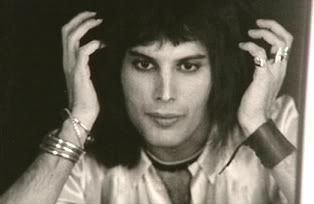
C’est chic:
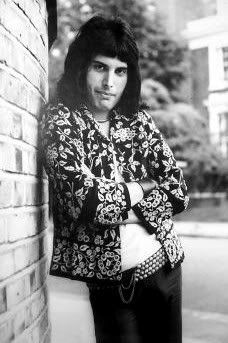

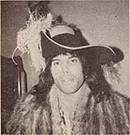
Freddie Mercury resembling
a Shakespearean dramatic actor:
Lyrics, literature and
philosophy:
Brian May: “Freddie’s stuff was so heavily cloaked, lyrically. But
you could find out, just from little insights that a lot of his private
thoughts were in there, although a lot of the more meaningful stuff was not
very accessible.”
Freddie Mercury once said he didn’t read books because it was a waste of
time… But in reality, the lyrics we can hear in his songs prove of an
intelligent mind; just think about Bohemian Rhapsody and its countless
metaphors and symbolism. Actually, Freddie must have been a well-read person
and the above stated phrase just one of his numerous provocative and sarcastic
jokes; in his lyrics you can find references to the Bible and Catholicism,
Greek mythology, existentialism (in “Bohemian Rhapsody”), Islam (in
“Mustapha”), Christianity (in “All Gods People”), issues about morality and
basic philosophy in songs like “Don’t Try Suicide” and “Keep Passing the
Open Windows” and to various classic prose and poetry writers. For
example, the opening lines “In the land where horses born with eagle wings |
And honey bees have lost their stings” in the song “My Fairy King” are
inspired by the poem “The Pied Piper of Hamelin” by Robert Browning.
With all those mentioned examples Mercury surely must have read classics
like Goethe or Marlowe etc., philosophers like Sartre, Camus (after who the
only problem of our life is finding the sense of it), Friedrich
Nietzsche... and even librettos to operas such as the “Magic Flute” by Wolfgang
Amadeus Mozart. Indeed, Schikanaeder’s libretto to
the “Magic Flute” contains some well-known phrases which appear at different
times: “Is this reality?” “Or is this just imagination?” (The same
problem/question is also one of the main problems in the entire history of
philosophy – namely what can be understood under “reality”; or even: how can we
know that our life is real? – for example in René Descartes philosophy).
Another fact of interest is that Freddie grew up in a religious
environment. Concluding from this piece of information and noticing the strong
Christian influence on Queen’s first and second album Freddie surely knew much
about religion and the traditions of his culture.
During Queen’s early career, many of their
songs – especially those written by Freddie – were inspired by magic and
fantasy. Unlike other bands of that time, whose fantasy themes centred on the Tolkienesque literature of that time, Freddie’s inspiration
centred mainly on the Victorian’s obsession with fairies and their folklore.
In addition to the above mentioned, his lyrics are written in various
forms; some songs are composed in monologues, dialogues, ballads, some others
in elegiac form or even in that of the Aristotelian tragedy which contains a
choir who comments the action of the persons within the oeuvre – the best example is probably “The
March Of The Black Queen” and the middle section of “Bohemian Rhapsody”.
Freddie Mercury received twice the Ivor Novello award for his songwriting
– for “Killer Queen” and “Bohemian Rhapsody” (actually, he even received one
posthumously for “Living On My Own”); although he did not tell publicly what
literature he liked to read and some of his lyrics may appear tongue-in-cheek
(which they were at times, because it is impossible to be always serious:-)),
it is obviously that he was interested in classic literature; his deep thoughts
certainly prove of a sophisticated nature.
Film:
David Wigg:
“He loved the ballet, opera and theatre and, of course, this influence was
often embraced in his stage performances and Queen’s imaginative videos:”
“Bohemian Rhapsody” is not
the first music video ever… but it is the first with a theatrical, almost
dramatic atmosphere. Queen and Freddie Mercury turned a simple recording medium
into a possibility of artistic expression. Queen did not just ‘sing’ this song
in front of a camera – they ‘acted’ it. And this fact makes the video so
revolutionary, which led to numerous confusions, whether it is the first or
not. Queen’s video just gave the world a new and fresh idea, which wasn’t seen
before. And that’s because it is so important in the development of the modern
music video history.
+++
Some of the albums owned
by Freddie Mercury while he was student (sources: documentation
“Becoming Queen” and – as far as I can remember:-) where I read this info –
“Queen – The Early Years”; Freddie’s fellow colleagues and band mates report
that young Freddie Mercury owned only about 12 albums while studying):


·
The Who: “Tommy”
·
“Led Zeppelin”
·
Jimi Hendrix: “Electric Ladyland”
·
“Cabaret” (Soundtrack)
·
The Beatles: “The White Album”
·
The Who: “Sell Out”
·
“Led Zeppelin II”
© Copyright 2006 - 2013; Daria Kokozej (Contact Me)